CASE STUDY
Building a Repeatable
Shorts System in Camtasia
Instead of simply editing a few videos, I built a lightweight content system the client could realistically maintain using software they already owned.
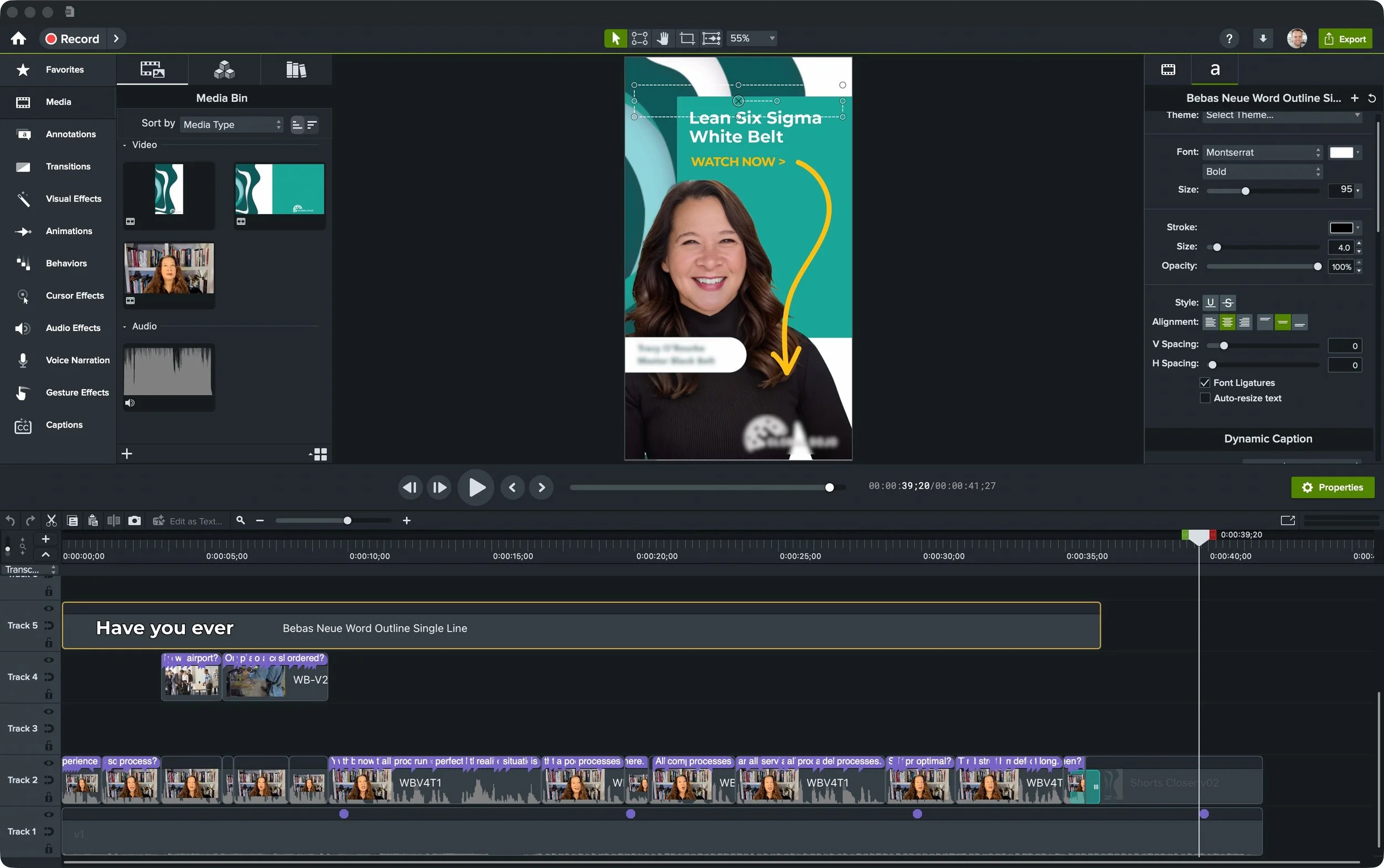
| The real problem wasn’t editing. It was workflow friction.

CLIENT
Independent training business
The client situation
FOCUS
Repurposing long-form training videos into shorts


FOCUS
Repurposing long-form training videos into shorts
TOOLS
Camtasia
CLIENT
Independent training business


TOOLS
Camtasia
DELIVERABLES
4 Shorts + template + walkthrough
DELIVERABLES
4 Shorts + template + walkthrough
GOAL
Make short-form
publishing
repeatable
GOAL
Make short-form publishing repeatable
The Client’s Situation
The client wanted to post more consistently by turning existing training content into social shorts.
✅ They wanted a process they could realistically keep using
✅ They did not want another software subscription
✅ The content needed to guide viewers toward a clear next step
The Hidden Problem
On the surface, this looked like a video-editing request.
The deeper issue was system design.

Tool friction
Introducing new software would make the process harder to sustain.
Tool
friction
Workflow friction
Reusable assets reduced repeat decisions and sped up future creation

Workflow
friction
Introducing new software would make the process harder to sustain.
Reusable assets reduced repeat decisions and sped up future creation
Content friction
The shorts needed a clear path from quick content to next-step offers.

Content
friction
The shorts needed a clear path from quick content to next-step offers.
My Thinking
My Thinking

Use the tool they already own.
Familiar software lowers the
barrier to follow-through.

Use the tools they already own
Build a repeatable format
A template creates consistency without making the work rigid.
Familiar software lowers the barrier to follow-through.


Teach the system
Walkthrough and checklist make the work reusable after delivery.
Build a repeatable format
Create a clear next step
Each short should connect to
the next logical action,
not just exist as a clip.
A template creates consistency without making the work rigid.

Reduce cognitive load
Checklists, reusable closers,
and organized assets make
future creation easier.
Teach the system
Checklists, reusable closers, and organized assets make future creation easier.
Create a clear next step
Each short should connect to the next logical action, not just exist as a clip.
Reduce cognitive load
Walkthrough and checklist make the work reusable after delivery.
What I Delivered
✅ 4 complete shorts
✅ Custom tutorial
✅ Reusable checklist
✅ Timestamped guide for the tutorial
✅ Camtasia project file template
✅ 2 reusable closers / outro versions
✅ CTA strategy

4 complete shorts

Custom tutorial

Reusable checklist

Timestamped guide for the tutorial

The deliverables were designed as a system, not a one-off batch of files.
Camtasia project file
template


2 reusable closers /
outro versions
Follow-up Q&A call
CTA strategy
The deliverables were designed as a system, not a one-off batch of files.
Why the System Works
No new subscription. No overly complex workflow. Built inside software they already knew.
It fits the client’s reality
It fits the client’s reality
Template, walkthrough, and reusable assets removed repeat decisions and sped up future creation.

It reduces future effort
It reduces future effort
It supports the business
The shorts now had a clear relationship to the next action.
The shorts now had a clear relationship to the next action.
It supports the business
Outcome
Outcome
The value of the project wasn’t just four finished shorts. The client also left with a repeatable process, a clearer path from short-form content to next-step offers, and less dependence on custom editing for every new video.
The value of the project wasn’t just four finished shorts. The client also left with a repeatable process, a clearer path from short-form content to next-step offers, and less dependence on custom editing for every new video.
Next-Stage Opportunities
Next-Stage Opportunities
A useful next phase would begin with a lightweight post-mortem: review what was easiest to produce, where the workflow still created friction, which CTA paths felt strongest, and which reusable assets would save the most time next round. That analysis would guide the next layer of tools, planning, and measurement.




Performance Dashboard
Expanded Template Library
Shorts Planning Calendar
Shorts Planning Calendar
After the initial system has been tested, a lightweight review could identify what worked well, where friction remains, which CTA paths are strongest, and which reusable assets would save additional time.
Next-Stage Tools
Next-Stage Tools
CTA Tracking Spreadsheet
CTA Tracking Spreadsheet
Performance Review Dashboard
Expanded Template Library
If you care about clear communication and videos that make an impact, let’s talk.